Frank Chad Hoeppel
A uniquely positioned IT professional with decades of experience – Federal senior management, military, sales, and education – and a reputation for customer experience excellence.

About Me…
I’ve spent most of my professional career in a variety of information technology roles spanning federal, commercial, and educational arenas. I started my IT career by supporting dozens of Members of the US House of Representatives as a systems administrator and end-user support specialist. I supported the Federal Aviation Administration through Change Management oversight and training coordination duties, worked for the Ford’s Theater Society in improving office infrastructure, and supported users at the DC-area offices of Nichols Research, a defense contractor. I also served as the Coordinator of Information Technology Training Programs for the Workforce and Economic Development Program of Pennsylvania, developing and executing customized training events for companies like Hershey Foods, Harley Davidson, and Snyder’s of Hanover.
Joining the Army after the events of September 11th, I saw two tours of duty supporting Operation Iraqi Freedom with the 3d Armored Cavalry Regiment, earning 18 decorations as a Cavalry Scout, SUAV Operator, and Tactical Operations Center NCOIC. I also supported the European Command Joint Analysis Center at Fort Meade, MD as an intelligence analyst. My commitment to Veteran well-being, including volunteer efforts to ensure successful transition to civilian life, stems from this service.
After leaving the Army, my work as a Project Manager and Change Manager with Perot Systems Government Services led me to support several classified programs and a contracting role in USDA’s Infrastructure and Operations Lab. I have served the Department of Agriculture since joining the Federal service in May of 2009. My roles as a Change Manager, the first Customer Relationship Manager, the acting National Office Support Division Director, and the Governance Services Division Director were all for the end-user support organization of OCIO.
When not at work or traveling with my wife Kathryn, I enjoy making music at my home in Cheyenne, Wyoming. I am also an unapologetic and lifelong Steelers and Orioles fan.
Recent Experience
Please select the arrow next to the position title for additional information
Deputy Associate Chief Information Officer (GS-2210-15) | USDA Client Experience Center (CEC) 2/2017 to Present
- Led the management and oversight of Enterprise services and End-User Support services to 100,000 users across the globe and Department-level shared services initiatives. Assisted in the oversight and management of a $400+ million budget and over 1,000 Federal Employees and contractors.
- Authored the CEC Tactical Plan, providing instruction on; personnel realignment to counter Deferred Resignation departures, project resourcing and scheduling to address resource losses, and service level modifications to address capacity challenges.
- Developed the Client Experience Center Strategic Framework, ensuring all initiatives addressed four key elements – workforce development, value proposition, technical optimization, and service maturation – and aligned with organizational capacity management principles.
- Executive Sponsor of the Operationalization of Endpoint Personas initiative. Coordinated with Gartner and other vendor support in developing persona definitions. Socialized with and gained approval for implementation from USDA Senior Executives. Developed the strategy for operationalization, and led the integrated project team that aligned common attributes to positional requirements.
- Sponsor and Architect of the Departmental Computer Asset Management initiative, designed to streamline and consolidate all endpoint asset management activities for the entire Department.
- Nominated for IT Leader of the Year and Transformative Project of the Year (2024)
- Executive Sponsor for the revision of the CEC Mentoring Program’s expansion to accommodate all of the Office of the CIO.
- Founded the Enterprise Change Advisory Board for USDA’s Office of the CIO (OCIO), developing the pilot processes to capture enterprise changes for OCIO Leadership.
- Co-Chair of the Change Management and Customer Experience Integrated Project Team for OCIO
- Leadership team for the One Neighborhood initiative, requiring the co-location of resources in USDA national headquarters facilities. The initiative involved 4,600 staff re-locations and equipment moves while complying with COVID-19 protocols and implementation of a software-defined network to simplify moves across 17 network boundaries.
- Chair of the OCIO Federal Employment Viewpoint Survey (FEVS) Working Group – responsible for reviewing FEVS responses, developing mitigation projects for key issues, and communicating with employees the relationship between them.
Chair of the Natural Resources Research Center (Fort Collins, CO) Campus Executive Committee | 3/2018 to Present
- Responsible for the allocation and assignment of all building space to accommodate the Return to the Office initiative, ensuring all local USDA staff were accommodated with desk space.
- Oversaw the transition of 50% of building space post-COVID, saving more than $400,000 per-year in leasing charges.
- Responsible for building operating status and communications to all employees.
- Supervises the management of facility budget between GSA, Colorado State University, and USDA occupants.
- Responsible for Physical Security, including Federal Protective Service facility security review.
- Hosts and chairs the Executive Committee meetings to review building status and call votes on facility management decisions.
Continuity of Operations, Disaster Recovery, and Emergency Management (COOP-DR-EM) Coordinator for OCIO | 10/2017 to 8/2024
- Formalized the COOP-DR-EM Team structure and standard operating procedures.
- Executed Fundamental improvements in program support to USDA mission area and office continuity professionals.
- Named the Out of Area Successor for all of OCIO, acting as the CIO in emergencies where the CIO was unavailable.
- Participated in multiple Eagle Horizon continuity exercises at the Department level.
- Realized significant gains in High Value Asset management and integration of assets to Mission Essential Functions.
- Oversaw IT systems restoration, staffing augmentation, and emergency coordination for USDA facilities through several hurricanes, floods, tornadoes, and wildfires across the continental United States and outlying territories.
- Measured Team performance and program effectiveness against Federal Continuity Directive #1, reporting quarterly to senior executives.
OCIO Pandemic Coordinator | 3/2020 to 3/2024
- managed information collection, employee assistance, and reporting requirements for 2200+ staff in 295 locations across 11 time zones
- Represented OCIO on the USDA Pandemic Coordination Committee.
- Served on both Headquarters and National Response Planning Committees, providing IT process, technology, and policy information to senior executives for the Department.
- Sponsored and delivered vaccination information and tracking tools
- Sponsored process and procedure changes to balance employee safety and mission fulfillment, especially involving remote user support and space usage to meet protocols.
- Earned an Award in 2022 from the USDA CIO for support of this effort.
Acting Associate Chief Information Officer (SES) | USDA Client Experience Center (CEC) | 9/2017 to 12/2019
- Acted in a Senior Executive Service role for more than 2 years, leading an end-user support organization of ~1,000 employees and contractors supporting 45,000 customers in 3,000+ locations across 11 time zones with a budget of more than $200 million.
- Responsible for the End-User Consolidation initiative – a multi-year effort combining all Mission Areas in the Department under a single End-User support organization.
- customer base increased from 36,000 to 100,000 users.
- Added more that $145 million to a fee-for-service business line
- combining staff from nine Mission Areas and 20 contract vehicles
- Received the Secretary’s Honor Award for leadership.
- Designed, sponsored, and implemented the first hardware blanket purchase agreement for the Department, now in its third iteration with a ceiling of almost $400 million.
- Member of OCIO Senior Staff and the CIO Council
- Member of the Enterprise IT Modernization Advisory Committee.
- OCIO Representative on the USDA Space Optimization Committee.
- Executive sponsor for the Strategic Sourcing and Category Management team, serving on the Secretary of Agriculture’s Category Management Center of Excellence.
Director, Customer Services Division (GS-2210-15) | USDA Rural Development (RD) | 10/2015 to 2/2017
- Responsible for the complete re-development of the Customer Service Division, including:
- Project Management foundations and disciplines applied to customer improvement projects through Project Central – a Salesforce project tracking application – for the entire Division to set baselines and report progress.
- Enterprise Architecture development and technical reference model creation.
- Customer Collaboration capture and tracking.
- Process and Procedure creation and performance measurements for the Division staff, reportable to the CIO and other executive leadership.
- Improved inventory accuracy to over 99%
- Reduced incident ticket completion time by 15%
- Identified cost avoidance opportunities sufficient to justify Division salary and benefits.
- Communications Strategy integration with Rural Development marketing professionals.
- Applying Human Resources standards transparently and consistently for performance and morale improvements.
- Expanded the scope of service for the Division from national headquarters staff to full Mission Area support – more than 5,000 employees across the United States.
- Chair of the Strategic Sourcing Initiative, End-User Devices, Integrated Project Team.
- Member of the IT Team for the Secretary’s Administrative Streamlining Program’s Shared Administrative Services initiative.
- Member of the Management and Administrative Resources Committee
- Sub-committee lead of the Streamlining Services Committee for the USDA Marketplace and Space Utilization initiatives.
- Performs business development activities with agencies within the Department for enterprise solutions, and between Departments for collaborative opportunities.
- Selected as the Acting Chief Information Officer (SES) for a Detail in January 2017
Director, Governance Services Division (GS-2210-15) | USDA Client Technology Services (CTS) | 5/2014 to 10/2015
- Selected to improve the responsiveness and customer service aspects of the Division responsible for:
- Security Compliance, specifically the FISMA, A-123, and USGCB standards
- Section 508 and Records Management
- IDLS and FOIA activities,
- Vendor Management,
- Service Level and Operating Level Agreement development activities
- support of Department-level shared services initiatives
- Chair of the Change Advisory Board for Service Center Agency Support
- Chair if the IT Team for the Secretary’s Administrative Streamlining Program’s Shared Administrative Services initiative
- Executive Sponsor for the Departmental Testing Lab, Virtual Access Solutions (including VDI, Citrix and non-GFE remote connectivity), National Office Infrastructure Improvement and SharePoint Redesign initiatives.
- Sub-committee lead of the OCIO Streamlining Services Committee for the USDA Marketplace and Space Utilization initiatives.
- Member of the USDA CIO Council and the CIO Advisory Board
- Program Management and oversight on several major IT modernization projects.
- Performed business development activities with agencies within the Department for enterprise solutions, and between Departments for collaborative opportunities.
Customer Relationship Manager (GS-2210-14/15) | USDA Information Technology Services (ITS) | 11/2010 to 5/2014
- Developed the position of Customer Relationship Manager with the ACIO for ITS to provide a dedicated engagement and advocacy resource to customer senior leadership. Answered directly to the ACIO of ITS and provided senior customer agency management with an additional resource for issue resolution, communication, and program management.
- Briefed customer agency CIO, Deputy CIO and senior Division management on ITS activities and performance metrics. Collected requests for status updates and information and provides information as requested on all ITS activities.
- Designed several communications improvements for ITS, including the re-design of the ITS Share Point presence, the FAS Communications Plan and multiple customer reporting projects.
- Assisted in the resolution of customer incident management issues and provided additional resources to operational departments upon request.
- Named as the Acting Director of the National Office Support Division:
- Created a new Division within the existing ITS organizational framework to focus specifically on National Headquarters End-User information technology support and operation.
- Eliminated more than 2,000 backlog incident tickets in the first 8 months of operation.
- Developed fundamental and impactful changes to all Performance Work Statement and Performance Requirement Summary documents for contracting organizations, enforced more stringent performance statements in performance reviews with civilian employees.
- Provided improvements in the infrastructure that supported the end-user community, including a triple-redundant shared drive presentation solution and a desktop imaging solution for loaner machines.
- Named As the Acting Deputy Associate CIO:
- Promoted in an Acting role to ensure continuity of Service Center Agency operations (39,000 users in 2,700 locations) and to support Department-level shared services initiatives.
- Assisted oversight and management of a $200 million budget and 665 Federal Employees.
- Chair of the IT Team for the Secretary’s Administrative Streamlining Program’s Shared Administrative Services initiative.
- Executive Sponsor for the Departmental Testing Lab, Virtual Access Solutions (including VDI, Citrix and non-GFE remote connectivity), National Office Infrastructure Improvement and SharePoint Redesign initiatives.
- Sub-committee lead of the OCIO Streamlining Services Committee for the USDA Marketplace and Space Utilization initiatives. Member of the USDA CIO Council and the CIO Advisory Board
- Provided Program Management oversight on major IT modernization projects.
Information Technology Specialist (GS-2210-12/13) | USDA OCIO Information Technology Services | 5/2009 to 11/2010
- Performed change management activities for the Infrastructure and Operations Laboratory (IO Lab) to ensure:
- New software titles and upgrade packages to existing software were tested against core images and select Agency-developed applications.
- Hardware purchased by Agencies were tested against core images and device drivers incorporated as needed.
- Developed the “Mission Board” concept to facilitate project awareness and provide capacity management for customer organizations, improving efficiency for the Lab and increasing awareness of test workload for customer agencies.
- Represented the Lab during critical security activities for the Foreign Agricultural Service, ensuing device hardening and vulnerability remediation activities occurred promptly and effectively.
Program Manager | Perot Systems Government Services | 10/2006 to 5/2009
- Contractor Team Lead for functional area that handles the development of the functional requirements for all change requests within the purview of the Infrastructure Deployment Branch for the US Department of Agriculture
- Team Organization
- Project Development Team went from Concept to Operation in 38 business days
- Follows the Change Manager role in the Service Support quadrant of the ITIL model
- Coordinate the workflow of 40-50 Requests for Change per month
- Performed final approval for all request for change projects
- Supervised a team of 4
- Documentation
- Developed and Instituted the Software Submission Directive, applying policies and procedures for software certification requests to ensure an FDCC-compliant environment
- Authored the Issue Paper for the Energy Star Compliance Initiative
- Solely responsible for all process and procedure documents, reporting metrics and deliverables for the Team
- Revised the submission requirements and procedures for AD and OU Group Creations, Modifications and Deletions
- Organization and Coordination
- Promoted to Site Manager for the Perot Systems contract personnel
- Participated in the Enterprise Change Management group meetings
- Participated in the Architecture Coordination meetings, setting the priority of all major initiatives to move through the Branch in the coming Fiscal Year
- Participated in the yearly IT Managers conference
- Project Lead on the NRCS ESRI ArcGIS 9.2 upgrade
- Developed the metrics for the Branch to utilize in all Service Level Agreements
Tactical Operations NCOIC/ METL Training NCO | U.S. Army and Army Reserves | 6/2002 to 6/2010
- Volunteered after 9/11 and was selected to perform several roles in the 3d Armored Cavalry Regiment, Including:
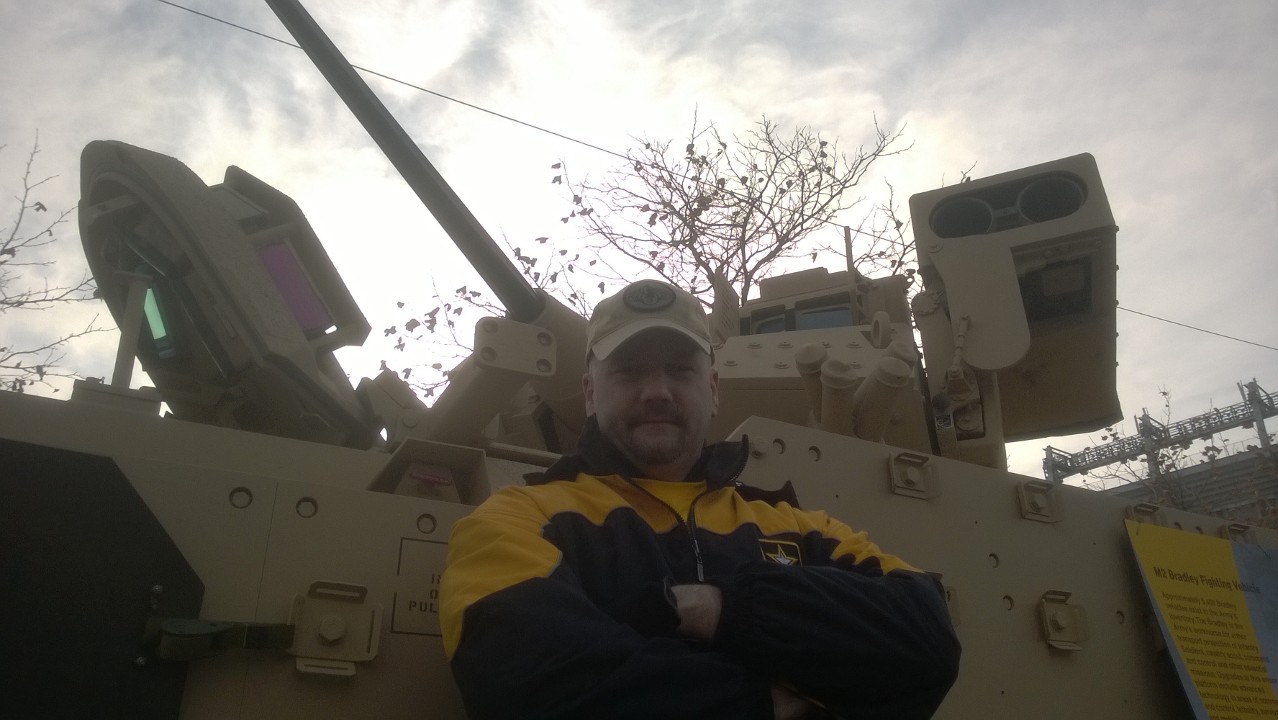
- Bradley Armored Fighting Vehicle crewman.
- Personal Security Detail for Battery Commander.
- Moved to Headquarters for Administrative Non-Commissioned Officer (NCO) and Tactical Operations roles.
- Selected over higher-ranking NCOs to become the Tactical Operations NCOIC for 2nd deployment to Iraq.
- Moved to the European Command Joint Analysis Center for US Army Reserves assignment, performing training and exercise planning tasks for Mission Essential Task List (METL) requirements to ensure all Army members of the Center were rated successfully, including land navigation, first aid, marksmanship, communications, and other deployment-related activities.
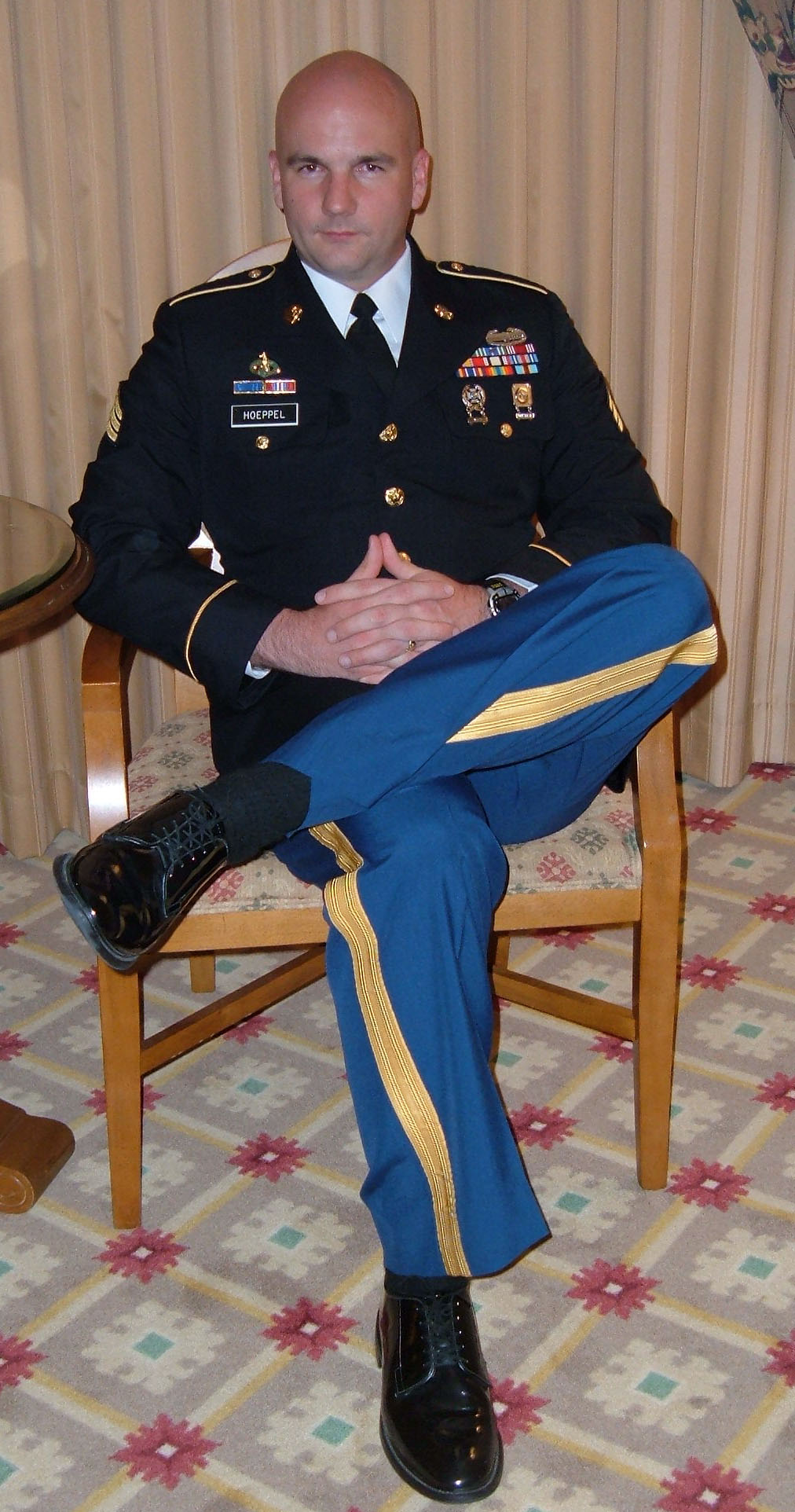
- Earned 18 total decorations and badges in 4 years of Active Duty Service
- Earned a Joint Services Achievement medal for excellence in Opposing Force (OPFOR) planning and exercise participation in the Army Reserves
Executive Qualifications
Please select the arrow next to the listing for additional information
Leading Change – End-User Consolidation
In December of 2017, the Secretary of Agriculture ordered the consolidation of all IT end-user support organizations into a single entity, constructed around the Client Experience Center (CEC), then the end-user support organization for roughly a third of all USDA employees. This End-User Consolidation initiative would triple CEC’s customer base, require years of planning and preparation, and represent the largest Federal effort of its kind since the creation of the Department of Homeland Security.
As the then Acting Associate Chief Information Officer, a Senior Executive position, I directed my team to quickly develop a Vision and Program plan for the execution of this request, estimating four years to complete and requiring a multi-million-dollar investment in project management and technical solutions to unify existing platforms, networks, and services. Political considerations – requiring completion before the next presidential election – left CEC with roughly half the time requested, no external funding, and no additional personnel aside from what the consolidation provided to achieve the Secretary’s goal.
Immediately, I streamlined requirements and modified the schedule to meet the new target. While certain activities had to be sacrificed, namely resourcing organizational change management, I took advantage of adaptive leadership training received at the Federal Executive Institute to identify the critical actions and align them to existing resources proved essential during the rest of the initiative.
Onboarding more than 400 employees from every Mission Area and ensuring they appropriately into standardized positions was my priority and consumed most of the resources for the initiative. Contractually, a similar consolidation effort needed to occur with the same care. Where possible, resources were migrated as contracts were collapsed. Where required, contracts were maintained and transitioned to CEC contracting officers. As a result, I effected a 12% reduction in the cost-per-unit of major services, reducing overall costs by more than $21 million between fiscal years.
Another significant challenge was network consolidation, as 17 decentralized networks existed in USDA Headquarters buildings alone. Leveraging existing skill sets and knowledge base retained through the HR transition minimized the need for contracted workers, and reduced risk for significant outages. New-to-CEC services were developed, partly because CEC needed to support unique requirements and partly because those services were a superior solution.
End User Consolidation added more than 70,000 customers to CEC services and $145 million to a fee-for-service budget in just over two years, during which a 30-day government shutdown and the COVID pandemic added schedule and resource complications. The successful completion of this effort under these circumstances earned me and my leadership team the Secretary’s Honor Award.
Leading People – Pandemic Coordination
The COVID pandemic required all employees to vacate offices and facilities in March 2020. In the Office of the CIO (OCIO) COVID concerns included both the capacity and capability of information technology (IT) services to facilitate fundamental changes in how employees met mission and stayed safe. Emergency situations like storms, wildfires, earthquakes, and accidents all have a localized impact and a finite timeframe. With COVID, the impact was total and the timeframe utterly unknown, creating misinformation and anxiety that significantly impacted operational effectiveness. As the Pandemic Coordinator for OCIO, it was my responsibility to address this challenge while representing OCIO in Departmental COVID activities.
I applied a two-fold strategy; make clear and accurate communications to colleagues and staff a priority while balancing mission fulfillment with employee safety regarding operational tasks.
From a communications perspective, I committed to creating frequent, multi-channel efforts designed specifically to maximize awareness of COVID and related events. I built presentations for employees that included available resources for national, state, and local activities. Links to Federal resources for policy updates, particularly the workplace safety plan as it was developed and updated, were provided to all OCIO employees. I gave all employee requests for information priority; the answers shared wherever appropriate. Every email regarding COVID was addressed personally. More than 800 contact tracing events across OCIO were completed while securing privacy and complying with CDC, White House, and Federal Workforce Safety Task Force requirements.
Mission requirements were addressed through technology and process changes. I coordinated the adoption of virtual access tools that let OCIO staff work remotely, directly engaging customers and devices from anywhere. I supported the adoption of collaboration tools and platforms, allowing access to team members and their materials. The enterprise virtual private network (eVPN) allowed secure access to resources and, as bandwidth across this service became a challenge, incremental increases in the service accommodated increased traffic without disruption.
I advocated policy and process adjustments across OCIO centers, which accounted for local infection rates, physical distancing requirements, individual susceptibility to COVID, and household requirements when scheduling tasks. This adjustment in approach to servicing infrastructure demonstrated my interest in employee well-being while ensuring task completion.
My record of consistent and accurate communications, combined with interest in employee safety, minimized challenges with service coverage. The consistent customer satisfaction survey response over the course of the pandemic and the record of project completion during this time reflects the effectiveness of my approach during a challenging time.
Results Driven – Blanket Purchase Agreement
USDA had little to no standardization of desktops, laptops, and tablets across the Department. With procurement authority spread amongst individual Agencies or even programs, procuring new hardware depended on funding availability. The more random the procurement activities, the more diverse the make and model of the devices procured, making the hardware portfolio very complex and quite expensive to support. USDA needed to develop a straightforward means of streamlining the hardware portfolio while accommodating Agency and Office purchasing activities.
First, I was tasked with identifying how purchasing devices could be simplified. Conversations with procurement specialists identified the Blanket Purchase Agreement (BPA) as the mechanism to employ, minimizing overall procurement paperwork and giving USDA a “one-stop shop” for purchases of this type.
Second, I realized the need for an integrated project team (IPT) to collaborate on requirements. I requested representatives from all agencies and offices to provide a voice from each into the requirements themselves. The series of meetings to create the IPT, collect the requirements from the various agencies and offices, and consolidate them to a concise list of items for the request for proposal was long and contentious. I employed two approaches to bring the IPT to a consensus; maintaining focus on efficiency gains the BPA will provide, and a constant effort to reach agreement on even minor differences in requirements.
Third, I understood the importance of creating the processes for ordering from, updating items listed on, and addressing service challenges with the BPA. From a communications perspective, this element required the most frequent and transparent conversations with IT and Business leadership. The BPA was a concept that could be understood readily by leadership, but the ordering processes drew scrutiny from all manner of employee groups. I accommodated this challenge by assigning priority to clear and open dialogue, with any group and at virtually any time. Accepting recommendations from across USDA agencies, and providing evidence of acceptance in the finished product, fostered agreement as well.
My execution of the first contract provided lessons learned but validated the approach. As patching compliance and deployment success rates increased substantially, IT leaders not only embraced the BPA vehicle but offered technological improvements to further streamline the ordering and fulfillment process. The BPA also facilitated adoption of an Enterprise Depot, further streamlining order and receipt of hardware. As guidance further defining workstation ordering and support has been released over time, the BPA puts USDA in a better position to meet those requirements across the Department and moves USDA closer to private-sector behaviors regarding cost-effective end-user support.
Building Coalitions – Departmental Computer Asset Management
USDA had little to no standardization of desktops, laptops, and tablets across the Department. Even with the implementation of a Blanket Purchase Agreement (BPA), procurements were haphazard. Between Fiscal Year 2022 and 2023, USDA averaged 1,402 orders per year for laptops alone, 100 times more than several Federal agencies. This lack of coordination incurs tremendous cost in order processing, tracking, and deployment. It also doesn’t allow for the cost-per-unit discounts that bulk purchases provide, driving USDA’s laptop average to more than $2,000 each. As budget challenges for Fiscal Year 2025 became apparent, USDA needed to streamline procurement of end-user devices to save money and gain efficiency. I developed the Departmental Computer Asset Management (DCAM) service to address these needs.
First, I tasked myself and the DCAM team with crafting a compelling case for Mission Area consideration and adoption. The critical initial step was to clearly lay out the problem statement in a manner that resonated with both IT and business leaders, and demonstrate the validity of the research performed. The practices described in the DCAM proposal and strategy documents borrow heavily from virtually all Fortune 500 companies and an increasing number of public sector organizations. I relied on research performed across the Federal space and, in coordination with research organizations to solicit private sector feedback, collected compelling evidence of outright cost savings and resource efficiency gains.
However, a key challenge for USDA in adopting these practices is the federated nature of the department. Organizations are accustomed to ordering what, when, and how they choose, and in some cases have invested heavily in their specific processes. DCAM needed to allow for organizations to adopt it as a service on its own terms. By implementing the service as a year-long pilot and developing memoranda of understanding to capture the participation, I reduced or removed concerns about the adoption process.
Secondly, I ensured the integration of Mission Area, Agency, and Office personnel into the DCAM process in two key areas. From a hardware perspective, the ability of an organization to support the devices that appear on the hardware catalog is essential to securing participation. We have a Hardware Advisory Committee the reviews and selects the devices to be included on the revised BPA catalog. From a financial perspective, participating organizations need transparency and flexibility in ordering and payment processes. DCAM provides program-level order tracking to ensure fiscal accountability, and collects individual orders into quarterly procurements to get the best cost-per-unit.
Lastly, the communications requirements of a sweeping change like DCAM required significant investment in the quality and quantity of artifacts. I led the creation of a SharePoint presence dedicated to DCAM that is updated regularly and provides consistently available general information and frequently asked questions. I have also presented on the DCAM concept more than a dozen times to the CIO Council, Working Capital Fund, and the Integrated Advisory Board to solicit feedback and adjust the pilot as needed. The net result is a service that will address a significant inefficiency and provide actual cost savings at a time where USDA needs it most.
Business Acumen – Vendor Coordination
The Client Experience Center (CEC) found itself with 17 vendors after End-User Consolidation, covering most IT services and functions and located across the US. Understanding which vendor supported what activity in a particular location took significant effort. The Associate CIO for CEC, Tony Brannum, set a goal – establish a cohesive vendor community for CEC. An introductory session, hosted in Washington DC in July of 2022, framed the request for clearer communications between Federal and contracted resources. My challenge was to ensure this occurred within the rules and regulations surrounding Federal and Vendor interactions, accommodate COVID restrictions, and keep interest and engagement with the vendors high.
Initially, I created a series of conversations that allows vendor representatives to stay informed of current and future CEC and USDA activities while giving them all equitable opportunity to provide knowledge and recommendations for service improvements. The decision to host these locally in Washington DC accommodated vendor leadership and I made the decision for me to travel to host these meetings personally, both to indicate the priority placed in these sessions and take advantage of my presentation and hosting skills. While the initial sessions were successful, I realized quickly that the value proposition required something more than an attractive slide deck and charming emcee.
My next step was to create a virtual presence, accessible to all and available 24×7, enabling equitable access to information and providing another venue to collaborate. One of the lessons learned from our initial sessions was how unfamiliar each vendor was of their peers. Providing opportunities for them to collaborate benefitted CEC and the companies themselves. An outcome of these conversations were some recommendations to CEC about services or tools they had familiarity with. While helpful, I identified the need to provide a universally available process to the vendors to submit those recommendations.
As a result, I developed a survey to collect recommendation from the community, and a process to review those recommendations for possible inclusion in our project portfolio. The survey is hosted through a Microsoft Teams site and is available to all members to complete. Recommendations submitted through the survey are reviewed, discussed with the submitter and the entire community for additional discussion and awareness. I then bring the recommendation to CEC Leadership as part of our New Business Process and, if selected, the recommendation is resourced as a project.
The meetings are bi-monthly and have shown steady participation and improved engagement. More importantly, we have received multiple compliments on the value of the information we provide and the opportunities to collaborate across the community. Most importantly, I now have a community of partners eager to improve CE services by improving theirs, and the opportunity to continue improving important networking and vendor management skills.
Awards
- Secretary’s Honor Award | USDA/OCIO | 2020
- Awarded for the successful completion of the End-User Consolidation initiative, merging IT end-user support organizations from across USDA and creating a single service center supporting more than 100,000 users in 26 organizations.
- Outstanding Performance Award | USDA/OCIO | 2010, 2011, 2012, 2013, 2014, 2015, 2016, 2017, 2019, 2020, 2022
- Before changes were made to the awards structure at USDA, I earned an outstanding performance rating 11 of 13 years and monetary awards every year.
- Digital Transformation of the Year – Nominee | USDA/OCIO | 2024
- Nominated for digital transformation of the year through the implementation of the Departmental Computer Asset Management program.
- IT Leader of the Year – Nominee | USDA/OCIO | 2024
- Nominated for the IT Leader of the Year award for efforts to implement endpoint personas across all 100,000 USDA employees.
- Superior Service Award | USDA/OCIO | 2018, 2019, 2020, 2021, 2022, 2023, 2024
- Awarded for superior service on multiple occasions for support of the Pandemic, assumption of and improvement to the OCIO Continuity of Operations program, service on a multitude of boards, integrated project teams, mentoring programs, and other actions representing OCIO and/or USDA.
- Performance Award | Perot Systems | 2009
- Before joining USDA as a Federal Employee, I served as the Program Manager for the USDA Information Operations Lab and was awarded for providing superior service in a collaborative manner while managing the agreement profitably.
- Military Awards | US Army | 2003 – 2010
- Army Commendation Medal | 2004, 2005, 2006, 2010
- Army Achievement Medal | 2003, 2005, 2006, 2010
- Combat Action Badge | 2003
- Joint Service Achievement Medal | 2010
- Others: Drivers and Mechanics Badge – Tracked vehicle, Expert Marksman Badge – Rifle, Iraq Campaign Medal, GWOT Expeditionary Medal, GWOT Service Medal, Good Conduct Medal, Army Service Ribbon, Overseas Service Ribbon
Messages
Other Associations

Executive Advisory Committee
A long-standing committee member with Gartner’s Infrastructure and Operations team, providing input into Peer Forum and Conference agendas, research direction, and other facets of Gartner services.

Board of Advisors
For several years, Tactical 16 was an excellent opportunity for service members to express themselves through writing, and it was my pleasure to provide assistance with transitions from military to civilian life, especially in resume writing.

Volunteer
As one of 425,000 members, participates in national campaigns for veteran support and representation.
Gallery




 frankchadhoeppel.me